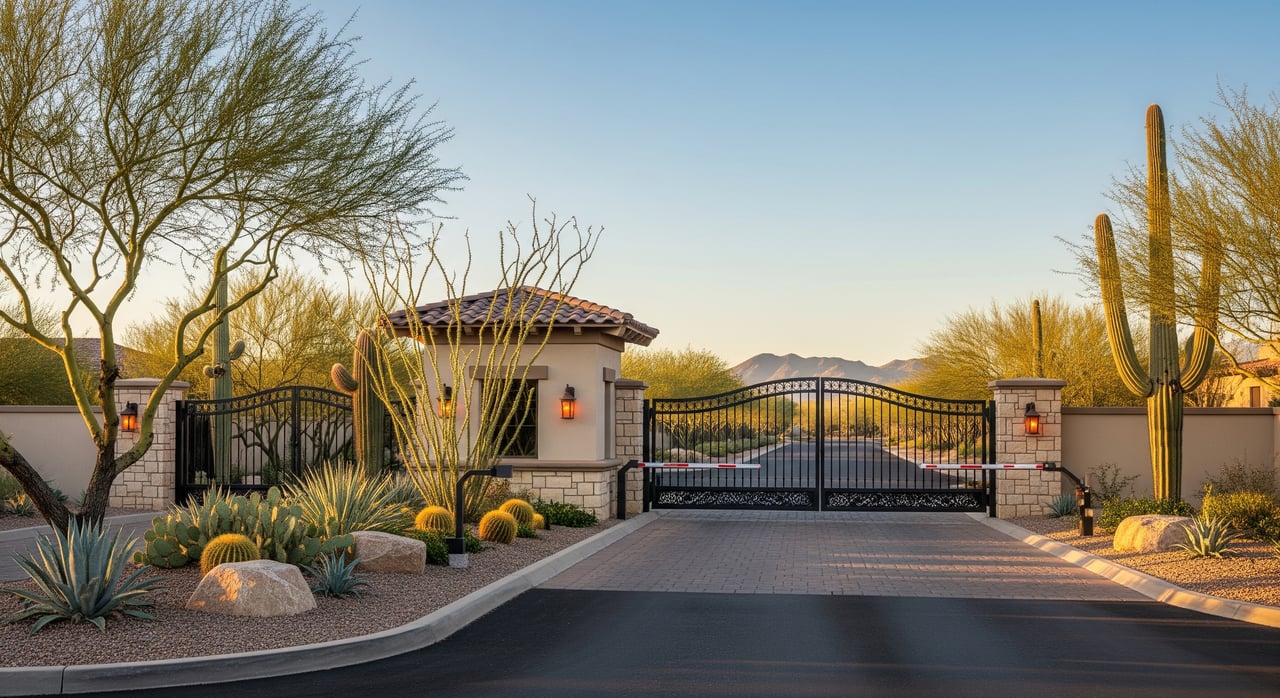
Thinking about a home in DC Ranch and wondering what guard-gated living really means day to day? You are not alone. If you value privacy, consistency, and a well-managed neighborhood experience, the details behind the gates matter. In this guide, you will learn how gates operate in DC Ranch, what amenities you can expect, why these features appeal to luxury buyers, and the exact documents and questions to cover before you buy. Let’s dive in.
What guard-gated means in DC Ranch
DC Ranch in Scottsdale, within Maricopa County, is a master-planned, higher-end community with multiple neighborhoods and a range of amenities. Several of those neighborhoods use controlled vehicle access as part of their design and community management. In practice, guard-gated means on-site security personnel or monitored systems control who can drive in, with rules and procedures set by the homeowners association or master association.
For you, this translates to defined gate protocols, credentialing for residents and vendors, and specific policies for guests, deliveries, and events. Gate operations are a component of the community’s larger governance, which is outlined in the CC&Rs, rules and regulations, and gate operating policies.
How gates operate in DC Ranch neighborhoods
Guard-gated systems combine people, technology, and policy. While specifics vary by neighborhood, you will usually encounter a mix of staffing and tech integrations that work together.
Gate staffing models
- 24/7 manned gatehouses with on-site security officers are common in higher-end areas.
- Some gates are staffed during peak hours, with electronic systems handling access at other times.
- Remote monitoring centers may verify visitors through cameras and telecom links when gates are not staffed.
Resident access methods
- RFID or windshield transponders allow registered residents to pass through without stopping.
- Key fobs, smartphone apps, or Bluetooth-based systems can open gates from your vehicle or phone.
- Some communities use PIN codes or license plate recognition to identify approved vehicles.
Visitor and guest entry
- Caller-at-gate: Guests speak with the gatehouse and you authorize entry in real time.
- Pre-registration: You can approve guests in advance using an app or web portal to shorten wait times.
- Temporary passes: Printed or digital passes are often used for specific dates and times, especially during busy seasons.
Vendors, contractors, and deliveries
- Contractor day passes are typical. Vendors register with management and receive timed credentials.
- Delivery services may use dedicated lanes or follow check-in rules, depending on community policy.
- Commercial vehicle hours and size limits are commonly enforced to protect streets and landscaping.
Security technology and monitoring
- Communities often integrate CCTV, intercoms, visitor management software, and license plate recognition.
- Mobile apps can streamline approvals and help track transient vehicle entries.
Emergency access and enforcement
- Emergency services typically have rapid-entry protocols and devices to ensure fast response.
- Gates are often engineered to fail open during emergencies. Ask how this is handled for each neighborhood.
- Private security enforces community rules but does not have police powers. Significant incidents are referred to local law enforcement.
Amenity access in DC Ranch
DC Ranch offers a layered amenity experience. Some amenities are typically managed by the HOA for residents, and others sit within private clubs that require separate membership. Always confirm the latest rules with current community materials.
HOA-managed resident amenities
- Community parks and pocket parks provide gathering space.
- Walking and biking trails connect green spaces and neighborhoods.
- Community pools, multi-use courts, tot lots, and community centers are generally for residents in good standing.
Private club membership basics
- The Country Club at DC Ranch operates separately from the HOA and usually requires membership.
- Typical offerings include golf, tennis, fitness, dining, and a private pool. Fees and guest privileges are set by the club, not the HOA.
- Membership terms, initiation fees, and dues vary. If a listing mentions club privileges or obligations, review the club’s documents carefully.
Guest use and private events
- Residents can often sponsor guests for HOA amenities under defined rules and time limits.
- Community centers or rooms may be reservable, often with fees, guest caps, and insurance requirements.
- Private clubs set their own guest and event policies, which may include passes or member sponsorship.
Parking and visitor rules near amenities
- Expect parking rules that may include time limits, guest passes, and street parking restrictions.
- Private club events may have separate parking procedures or temporary traffic control on busy dates.
Trails and public access
- Some trails or parks connect to public pathways. Others are private and restricted to residents.
- Check HOA maps and rules to understand which green spaces are open to the public and which require resident access.
Why luxury buyers choose guard-gated living
Guard-gated features attract many high-end buyers, but the fit depends on your priorities and lifestyle. Consider both the benefits and tradeoffs.
Privacy and controlled access
- Limiting casual through-traffic helps keep streets quieter and more predictable.
- Controlled entry supports a more private environment for daily life and entertaining.
Perceived security
- Visible gates and staffed entries can deter opportunistic crime and increase peace of mind.
- It is important to note that research on crime reduction is mixed. Gates contribute to a security ecosystem, but they are not a guarantee of safety.
Exclusivity and community standards
- Gated entries and private clubs often signal a premium environment.
- Strong covenants and consistent maintenance help protect curb appeal and neighborhood aesthetics.
Concierge-style support
- Gatehouses often assist with visitor screening and may handle package coordination in some cases.
- These touchpoints can create a smoother day-to-day experience.
Tradeoffs to weigh
- HOA fees, and private club dues if you join, can be significant. Check the full cost picture.
- Tight gate controls can create friction for frequent guests, vendors, and deliveries.
- Reduced street permeability can limit connectivity to surrounding areas.
- Resale depends on buyer preferences. Many shoppers value gated living, but the buyer pool can be more specific.
- Private streets may change how services are provided and who maintains roads, signage, and lighting.
Practical due diligence checklist
Use this step-by-step list during escrow to confirm the fit and avoid surprises.
Documents and disclosures to request
- HOA and master association CC&Rs, bylaws, and rules and regulations, including all gate policies and guest rules.
- The latest HOA budget, reserve study, and recent financial statements to understand fees and potential assessments.
- Gate operating manual or visitor management policy, including staffing schedules and technology details.
- Security incident summaries or reports if available.
- Meeting minutes for the last 6 to 12 months that mention gates, security, assessments, or major projects.
- Private club membership documents if club privileges or obligations are mentioned in the listing.
- Proof of association insurance and security vendor contracts.
Questions to ask the HOA, management, and listing agent
- Is the gate manned 24/7? If not, what are the staffing hours and who monitors off-hours?
- What resident credential systems are used, and what are the replacement costs?
- How does guest pre-registration work for daily visitors and events?
- How are Amazon, UPS, FedEx, and food deliveries handled during busy times?
- What are contractor access rules, commercial vehicle limits, and working hours?
- What are the emergency access protocols for police, fire, and EMS? Do gates fail open when needed?
- Are any gate upgrades, assessments, or litigation currently pending?
- Are streets private or public, and who maintains them along with signage and lighting?
- What are the rules for short-term rentals, exterior modifications, landscaping, and signage?
On-site testing during inspection
- Test gate operation with the seller or resident demo if possible.
- Confirm guest parking availability and delivery staging areas during peak hours.
- Verify whether any deed restrictions run with the property, including rare mandatory club membership.
- Review enforcement records to understand how rules are applied.
Financing and insurance checks
- Confirm your lender’s HOA documentation requirements and financial health review.
- Ask about association insurance coverage and whether owners need additional policies.
- Clarify if streets are private since that can affect service delivery and insurability.
Tips for a smooth day one
- Set up your resident app or fobs before move-in and test your RFID or transponder.
- Pre-load frequent guests and service providers in the visitor system to cut wait times.
- Confirm parking rules for housewarming events and delivery days.
- Save the community’s emergency contact instructions and ensure family members know the procedures.
- If you plan to use club facilities, schedule your membership onboarding early to align with move-in.
The bottom line
Guard-gated living in DC Ranch is about control, consistency, and a premium neighborhood experience. Gates help manage access, protect aesthetics, and coordinate amenities, while policies define how residents, guests, and vendors move through the community. The right fit depends on your priorities, budget, and how you plan to use the home.
Questions about gate policies or community fees in DC Ranch? Request a Private Office consultation to review HOA documents, club options, and neighborhood-by-neighborhood differences. If you want a local, boutique advisor with global reach, connect with St John International for a confidential conversation.
FAQs
What does guard-gated living in DC Ranch include?
- It includes controlled vehicle entry managed by security staff and technology, defined guest and vendor protocols, HOA-enforced rules, and layered amenity access for residents and private club members.
How do guests and contractors enter a guard-gated neighborhood?
- Visitors typically call the gatehouse or are pre-registered by you through an app. Contractors use day passes and follow set hours, with commercial vehicle limits common.
Are DC Ranch amenities open to the public?
- HOA-managed parks, pools, and centers are usually for residents in good standing, while private club facilities require membership. Some trails connect to public paths, but others are private.
Do gates guarantee lower crime in DC Ranch?
- No. Gates can deter some opportunistic crime and increase peace of mind, but research on crime reduction is mixed. View gates as one layer in a broader security approach.
What HOA documents should I review before buying in DC Ranch?
- Request CC&Rs, bylaws, rules and regulations, gate policies, the budget and reserve study, recent financials, meeting minutes, security policies, and any club documents tied to the listing.
How do emergency responders access guard-gated communities in Scottsdale?
- Communities coordinate rapid entry with local police, fire, and EMS, often using override devices and fail-open engineering. Confirm the specific protocol for the neighborhood you are considering.