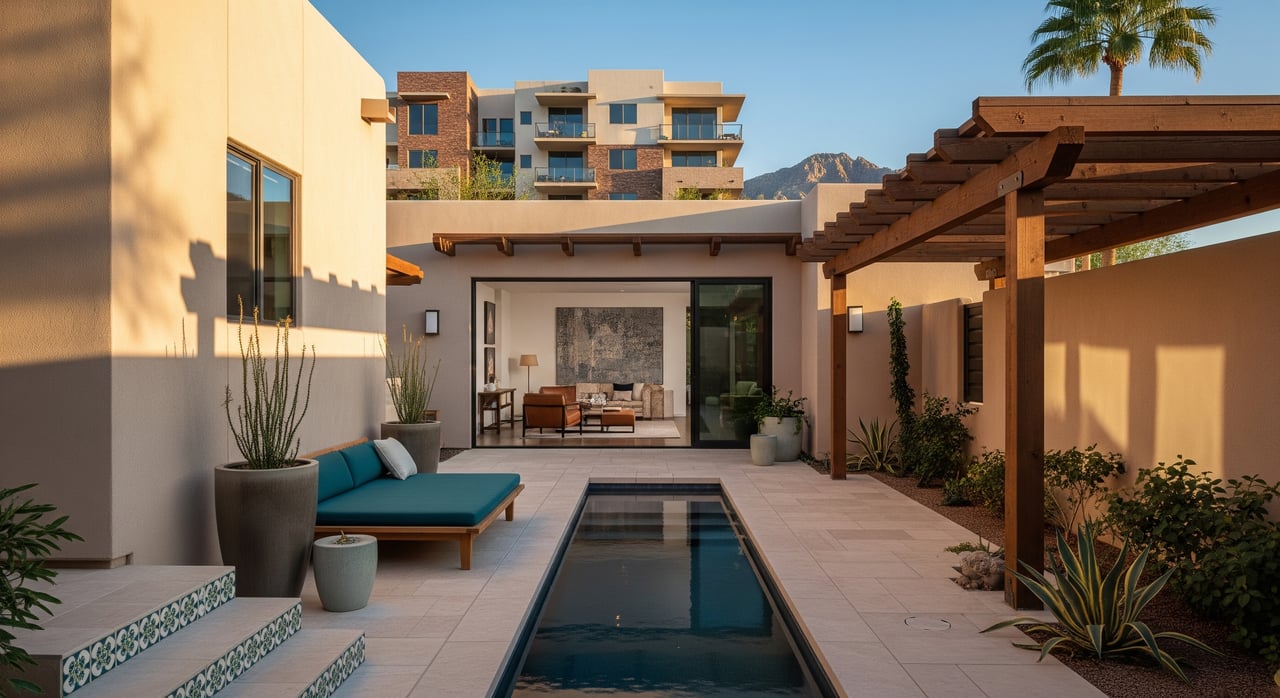
Trying to decide between a condo or a townhome in Old Town Scottsdale? You are not alone. Many seasonal and second‑home buyers face this choice, especially when they plan to lock and leave for part of the year. In this guide, you will learn how ownership, HOA rules, parking, noise, and maintenance differ in South Scottsdale so you can choose with confidence. Let’s dive in.
Old Town lifestyle and location trade‑offs
Old Town Scottsdale offers walkable access to restaurants, galleries, events, and nightlife. That convenience is a major perk, yet it also brings traffic and noise that can vary by block. If you value quiet evenings, orientation and building type matter.
Condos closer to the Old Town core usually trade private outdoor space for walkability. Townhomes on the perimeter often offer private garages and patios, along with easier street access. As a seasonal owner, balance your desire to stroll to dinner with your need for privacy and storage.
What you own: condo vs townhome
Condominiums explained
When you buy a condo, you typically own the interior airspace of your unit and share ownership of the roof, exterior walls, land, and amenities. The HOA usually maintains those shared elements, which often simplifies exterior upkeep for you. This structure can be ideal if you want a true lock‑and‑leave lifestyle.
Townhomes explained
A townhome is a building style, not a single legal form. Some townhomes are legally condominiums. Others are part of a planned unit development, often called a PUD, where you own the land under your unit as a fee‑simple lot. The difference affects maintenance, insurance needs, and taxes.
Why legal form matters
Do not rely on the marketing label. Ask for the recorded plat and legal description to confirm whether the townhome is a condo interest or a fee‑simple lot. Review the CC&Rs and HOA rules to see what you maintain and what the HOA covers. This impacts your annual costs, time commitment, and resale considerations.
HOA scope, dues, and reserves
HOA dues vary based on what they cover. In many condos, the HOA manages the roof, exterior, landscaping, pools, and common utilities. Some HOAs carry “all‑in” master insurance, while others use a “bare walls” approach that shifts more coverage to you. Townhome HOAs may maintain limited common areas and leave fencing or some exterior items to owners.
Request and review the full HOA disclosure packet. Focus on CC&Rs, bylaws, rules, minutes, current budget, reserve study, and any special assessment history. Strong reserves and a clear plan for capital projects are important, especially in older low‑rise communities.
Parking and storage in Old Town
Parking is a premium in and around Old Town. Confirm whether the unit includes a garage, an assigned covered space, or unassigned permit parking. If you plan to store a vehicle between visits, an enclosed garage with secure access is best. Ask about guest parking and any size or height limits in garages.
Townhomes are more likely to offer private garages and driveways, which can simplify seasonal vehicle storage. Many condos offer assigned spaces in gated lots or garages, but guest parking can be limited. Confirm HOA rules about long‑term storage and street parking.
Noise, privacy, and orientation
Condos with stacked units can vary in sound transfer. Concrete buildings and newer windows can help reduce noise, especially on upper floors away from the street. Shared hallways and elevators mean more neighbors passing by your door.
Townhomes typically provide private entries, patios, and less foot traffic at your threshold. Shared walls are still a factor, so check construction details and the unit’s orientation. Tour during the day and again in the evening to sample real‑world noise levels.
What to check on a tour
- Materials: concrete vs. wood framing, insulation quality, and window ratings.
- Exposure: whether the unit faces nightlife corridors, alleys, or quieter courtyards.
- Records: any HOA noise complaints and posted quiet hours.
Lock‑and‑leave convenience
If you live out of state, convenience is key. Condos often deliver the easiest lock‑and‑leave setup because the HOA handles exterior maintenance, landscaping, pool care, and common areas. Many communities in South Scottsdale are already geared to part‑time owners and property managers.
If you prefer a townhome’s privacy, confirm what falls to you. Fencing, small yards, or private patios might require owner maintenance. Ask whether the HOA allows property managers, house watch services, and smart home devices for remote access.
Security and access
- Look for gated buildings or secure entries.
- Confirm HOA rules for alarms, cameras, and smart locks.
- Ask about package handling, mailbox forwarding, and vendor access for seasonal checks.
Rentals and city rules
Many HOAs restrict rentals with minimum lease terms or caps on the number of rentable units. Some communities prohibit short‑term rentals. If you plan to rent seasonally or short‑term, you must verify both HOA rules and City of Scottsdale requirements, including any registrations, business licenses, and taxes. Do not assume rentals are allowed just because the location is near Old Town.
Utilities, systems, and seasonal costs
Ask whether HOA dues include water, sewer, trash, or irrigation. In the desert, landscaping and irrigation can be a notable expense for associations. Cooling is a year‑round priority in Arizona, so check the age and service history of HVAC systems. In some buildings, the HOA maintains common HVAC components, while in others you handle your own unit.
Decision framework for snowbirds
If your top priority is low effort and social amenities, a condo with robust HOA services and secure access is likely your best fit. Confirm the budget, reserves, and scope of maintenance and insurance.
If you value private entry, a garage for vehicle storage, and outdoor space, a townhome can be a strong choice. Verify whether exterior items fall to you and ensure you have a plan for oversight when you are away.
If rental income is part of your plan, first confirm HOA and city rules for leasing. Properties that allow short‑term rentals can produce income but often require more active management.
If noise is a concern, favor upper‑floor units away from nightlife corridors or townhomes oriented to interior courtyards. Always tour during evening hours.
Due‑diligence checklist
Use this checklist to streamline your process before you sign.
Ownership and legal
- Confirm legal form: condo or fee‑simple townhome within a PUD.
- Request the recorded plat and legal description.
- Obtain CC&Rs, bylaws, rules, and the HOA resale or estoppel packet.
Financial health of the HOA
- Review current budget, financial statements, and reserve study.
- Check reserve balance and any special assessment history.
- Ask about planned capital projects and dues changes over the last three years.
Insurance and liability
- Determine what the master policy covers, including interior finishes.
- Confirm whether you need an HO‑6 condo policy or a homeowners policy.
- Ask about loss assessment coverage requirements.
Use and rental restrictions
- Verify short‑term rental rules and any city registrations or taxes.
- Confirm minimum lease periods and caps on rental units.
Physical condition and systems
- Ask about roof, exterior paint, pool equipment, and HVAC age and service.
- Request any available inspection reports and disclosures.
- Inquire about any history of water intrusion, pests, or structural repairs.
Parking and vehicle rules
- Identify deeded or assigned spaces and any size limits.
- Confirm guest parking and rules on long‑term storage.
Noise and neighborhood compatibility
- Review any recorded noise complaints and quiet hours.
- Map proximity to event routes, restaurants, and late‑night venues.
Management and operations
- Confirm the HOA management company and 24/7 emergency contact.
- Ask about vendor contracts for landscaping and pool care.
Practical lock‑and‑leave
- Confirm access for property managers during your absence.
- Ask about smart lock and camera policies.
- Clarify package hold, mailbox forwarding, and gate locking rules.
Local regulatory checks
- Verify city rules for rentals, business licensing, and transient taxes.
- Check any neighborhood parking permits or zones.
Final thoughts
Choosing between a condo and a townhome in Old Town comes down to how you want to live and how much you want to manage from afar. Condos usually deliver more shared maintenance and amenities, with fees that trade for convenience. Townhomes tend to offer more privacy and garage storage, with responsibilities that vary by legal form and HOA.
If you want a clear, low‑stress path to the right choice, partner with a local advisor who knows Old Town buildings, HOA norms, and seasonal demand patterns. Our team helps you align lifestyle goals with the right structure, review the documents that matter, and negotiate the terms that protect you for the long run. To discuss your plan in confidence, connect with St John International.
FAQs
What is the key legal difference between condos and townhomes in South Scottsdale?
- Condos convey ownership of the interior space plus shared common areas, while townhomes can be either condos or fee‑simple lots in a PUD, which changes maintenance, insurance, and taxes.
How do HOA dues typically differ between condos and townhomes near Old Town?
- Condo dues often cover exterior maintenance, roofs, landscaping, and shared amenities, while townhome dues may cover only limited common areas, leaving some exterior items to owners.
What should I know about parking if I plan to store a car seasonally?
- Confirm whether the unit includes an enclosed garage and ask about long‑term storage rules, guest parking availability, and any garage size or height limits.
How can I reduce noise concerns when buying near Old Town nightlife?
- Favor upper‑floor condo units away from busy corridors or townhomes oriented to interior courtyards, and tour properties during evening hours to test real conditions.
Are short‑term rentals allowed in Old Town Scottsdale communities?
- Rules vary by HOA and the City of Scottsdale, so verify both the community’s leasing rules and any required registrations, licenses, and taxes before you buy.
What insurance do I need for a condo versus a townhome?
- Many condos require an HO‑6 policy to cover interior finishes and personal property, while fee‑simple townhomes often need a standard homeowners policy; always confirm the master policy scope first.