If you are buying in Desert Mountain, the biggest decision may not be the house itself. It may be the land under it. In this community, elevation, orientation, and lot placement shape your views, privacy, comfort, and daily routine in ways that are easy to underestimate at first. This guide will help you think through those trade-offs clearly so you can buy with more confidence. Let’s dive in.
Why Desert Mountain Feels So Different
Desert Mountain is not one uniform neighborhood. Official sources describe it as a large private community in North Scottsdale made up of many villages spread across desert terrain, ridges, canyons, and hillsides. That matters because two homes with similar price points can offer very different experiences based on where they sit.
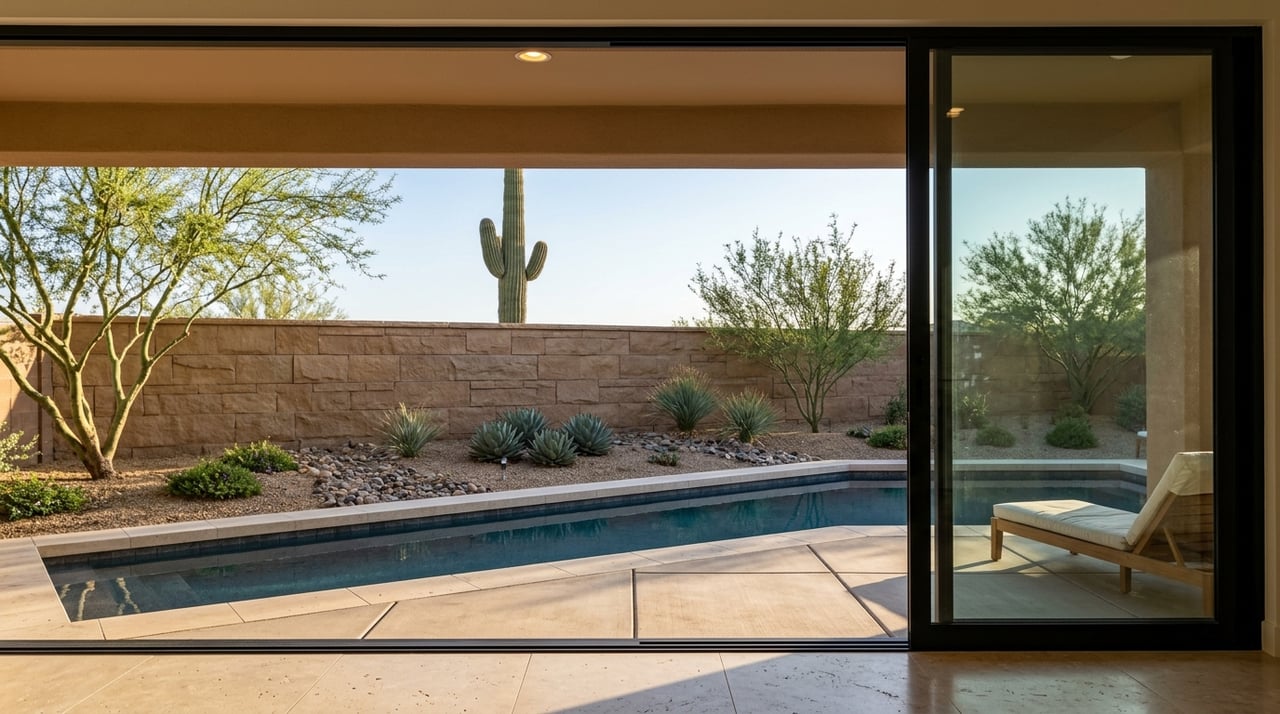
The community was designed to blend homes into the high Sonoran Desert. The HOA says at least half of each lot is preserved for native desert, and the architectural approach is meant to reduce visual impact and work with the terrain. For you as a buyer, that often translates into stronger natural buffers, more varied view corridors, and a more site-specific buying process.
Scottsdale itself has a broad elevation range, and Desert Mountain sits in the elevated North Scottsdale landscape near the McDowell Mountains. That helps explain why the community often feels removed from the Valley floor. In practical terms, buying here is often about choosing a combination of topography, outlook, and access rather than simply choosing a street address.
How Elevation Changes Daily Living
Higher lots usually feel cooler
Elevation is not just about scenery. Desert Mountain’s own community messaging notes that its higher elevation contributes to cooler summer temperatures, and the terrain across the property rises significantly in places. That means higher villages are generally a bit cooler and breezier than lower ones, especially on patios and during evening outdoor time.
It is best to think of this as a general pattern rather than a guaranteed temperature difference. Weather conditions vary, and each homesite has its own exposure and wind behavior. Still, if outdoor living is high on your list, elevation should be part of your search from day one.
Elevation also changes the mood
Higher settings often create a wider, more dramatic sense of space. In Desert Mountain, that can mean broader mountain backdrops, longer sunset views, and more visible city lights at night. Some of the highest-positioned official listings are marketed specifically around sweeping city-light, mountain, and sunset views.
Lower settings can feel different, but not lesser. A lower village may offer a more grounded, protected feel with easier access and a strong vantage point in its own right. The key is to decide whether you want the drama of a hillside perch or the convenience of a more central placement.
How Villages Shape Your View
Village names reflect the terrain
The HOA village map includes names such as Apache Peak, Painted Sky, Sunset Canyon, Saguaro Forest, Grey Fox, Mountain Skyline, and Turquoise Ridge. A village name does not guarantee a specific view, but it does show how closely Desert Mountain is organized around landforms and topography. That is one reason broad assumptions rarely work here.
A home in Apache Peak may offer a hillside setting with long-distance outlooks and strong privacy. A Saguaro Forest homesite may lean into expansive mountain views or high-elevation city lights. A lower-village lot in Grey Fox may still deliver an impressive vantage point without the same premium associated with the highest ridges.
View corridors are highly lot-specific
In Desert Mountain, the best question is not simply, “Which village has the best views?” A better question is, “What does this specific lot face, and what sits beyond it?” Patio orientation, ridgeline position, nearby washes, and the spacing between neighboring homes can all affect what you actually see and feel.
That is why two homes in the same village can live very differently. One may frame sunsets and distant lights, while another emphasizes mountain walls, golf frontage, or a more enclosed desert setting. If views are your priority, lot analysis matters as much as the home itself.
Golf Views vs. Hillside Views
Fairway homes offer openness and activity
Desert Mountain is home to six Jack Nicklaus Signature championship courses plus a seventh short course. That creates a wide range of golf-oriented view opportunities across the community. Some buyers love the open sight lines and manicured foreground that come with course-adjacent living.
Listings and course descriptions show how varied that can be. Some homes are aligned to fairways with sunset and mountain views beyond, while others pick up city lights or landmark peaks from a golf setting. In these homes, the golf course often becomes part of your daily visual experience.
Hillside homes often favor privacy
Hillside and canyon lots usually trade some convenience for longer sight lines and more seclusion. Official listing language repeatedly connects higher lots to privacy and panoramic views. Combined with terrain-sensitive design guidelines, that makes these homes attractive if you want more visual separation from surrounding properties.
That does not mean fairway homes lack privacy. It means the privacy works differently. A course-front property may feel more open and social, while a hillside lot may feel more tucked away and protected by topography and preserved desert.
Orientation matters as much as location
One of the most important details in Desert Mountain is exposure. Official inventory references southeast exposure, sunset orientation, city-light positioning, and mountain-facing patios. That is a reminder that the direction your outdoor living spaces face can have just as much impact as the village name on the gate.
When you tour, focus on how the main living areas and patio relate to the horizon. A strong lot on paper may not match your goals if the best views sit off a secondary room or if afternoon sun limits how you want to use the outdoor space.
Privacy, Access, and Social Feel
Privacy comes from more than gates
Desert Mountain has two main gates, 24-hour gate access management, and on-site security officers. That creates a strong baseline level of controlled access. But privacy here also comes from preserved desert, setbacks, building envelopes, and the way homes are tucked into the terrain.
In practice, ridge lots, cul-de-sac placements, and parcels with natural desert buffer often feel the most secluded. Fairway and clubhouse-adjacent homes may feel more connected to activity and circulation. Neither is better by default. It depends on whether you want retreat, convenience, or a mix of both.
Some areas feel more social
If you want a more walkable, lock-and-leave lifestyle, Seven Desert Mountain stands out. The official villages information notes that these homes are walkable to the No. 7 course and clubhouse, with many lining the fairways. That creates a different proposition from higher hillside villages where the experience is more about separation, views, and topography.
For some buyers, that social convenience is the right fit. For others, the appeal of Desert Mountain is the sense of escape that comes from being set into a canyon, ridge, or elevated desert edge. Your ideal location depends on how you plan to use the home.
What Price Ranges Suggest
Official current list prices show a wide spread across product types in Desert Mountain. Custom homes are listed from about $1.199 million to $16.5 million, villas, cottages, and patio homes from $800,000 to $3.7 million, future estates from $195,000 to $2.495 million, and Seven Desert Mountain homes from $1.434 million to $6.995 million.
Those are asking prices, not closed sales, but they help frame the market. In general, pricing reflects a mix of home size, product type, village placement, privacy, view quality, and access to lifestyle nodes within the community. The highest-priced offerings often highlight elevated siting, expansive views, and strong privacy.
That said, value is not limited to the highest ridge. Official inventory also shows that lower villages can offer strong vantage points and compelling outlooks. If you are value-conscious, you may find a better balance by looking for orientation, buffer, and view quality in a more central or lower placement rather than paying only for maximum elevation.
A Smart Way to Narrow Your Search
When buyers get clarity in Desert Mountain, it usually comes from answering four simple questions before touring too many homes.
Ask these four questions first
- Do you want cooler, breezier outdoor living? Focus more attention on higher villages and elevated lots.
- Do you want the strongest privacy? Prioritize hillside, canyon, cul-de-sac, and desert-buffered sites.
- Do you want a social, golf-centric setting? Look closely at fairway homes and Seven Desert Mountain.
- Do you want the best value relative to view? Consider lower-village or more central lots with strong orientation and natural vantage.
Once you know your priorities, home selection becomes much easier. Instead of comparing every property on the market, you can compare a smaller set of homes that fit the way you actually want to live.
Final Takeaway for Buyers
In Desert Mountain, you are not only buying square footage or finishes. You are buying elevation, exposure, buffer, and access. Those four variables explain much of the difference between a panoramic hillside home, a fairway residence, a lower-village value play, and a lock-and-leave option near club amenities.
That is why a disciplined, lot-first approach matters here. If you want a clear strategy for buying in Desert Mountain, St John International can help you evaluate the trade-offs that matter most and narrow the search to properties that truly fit your goals.
FAQs
What does elevation change when buying in Desert Mountain?
- Elevation can influence your views, privacy, breeze, and overall outdoor comfort, with higher villages generally feeling a bit cooler and offering broader outlooks.
Which Desert Mountain homes usually feel most private?
- Hillside, canyon, ridge, and cul-de-sac lots often feel more secluded because of topography, preserved desert buffer, and terrain-sensitive home placement.
Do lower villages in Desert Mountain still offer good views?
- Yes. Official inventory shows that lower-village homes can still have strong vantage points, so lower elevation does not automatically mean weaker views.
What is the difference between fairway homes and hillside homes in Desert Mountain?
- Fairway homes often offer open golf views and a more social feel, while hillside homes usually trade some convenience for longer sight lines and greater seclusion.
Is Seven Desert Mountain different from other Desert Mountain villages?
- Yes. Seven is positioned as a more walkable, lock-and-leave option near the No. 7 course and clubhouse, which gives it a different lifestyle feel than higher canyon or hillside villages.